
Intellectual Property Law Services
Patent Law
A patent grants you, the owner, a legally enforceable right to prevent others from using your unique invention in the US. In today's marketplace, innovative companies and inventors that want to turn their ideas into assets need comprehensive, strategic, high-value patents to compete effectively in the US. However, obtaining a patent for your idea in the US can be a lengthy, complex, and costly process without any guarantees of success. That's why it's valuable to have an experienced patent attorney on your side.
At the Idea Asset Group, our patent attorneys help secure and protect patent rights for our clients' ideas in the United States and across the globe. Our job is to turn your ideas into assets. We can help you by:
- Preparing and prosecuting both U.S. and international patent applications
- Working with foreign counsel in obtaining patent protection for technologies in various countries
- Providing international patent oppositions and patent enforcement
- Offering intellectual property counseling, infringement and validity opinions, and due diligence
- Providing post-issuance patent practice, including patent interferences, reexaminations, reissues, oppositions, and inter partes review proceedings, as well as related appeals to the USPTO Patent Trial and Appeal Board (PTAB)
- Performing prior art search and analysis
- Providing patentability and commercial evaluations
Turning Ideas Into Assets
At the Idea Asset Group, we employ a radically different approach to protecting your ideas. Put more simply, unlike typical law firms, we don't create a cookie-cutter, one-size-fits-all patent for our clients. When you come to us with your idea, our patent attorneys take an active role in exploring the outermost limits of what can be protected. We believe that your ideas are important. The stakes are too high to not push the envelope and explore every patentable aspect of your idea that you are entitled to under patent law. Our unique approach involves a multi-step process that allows us to customize and integrate your patent goals with your business goals while maximizing your patent coverage.
Step One: Maximize Coverage Options
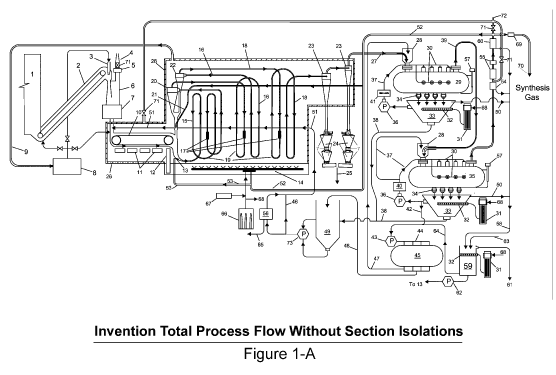
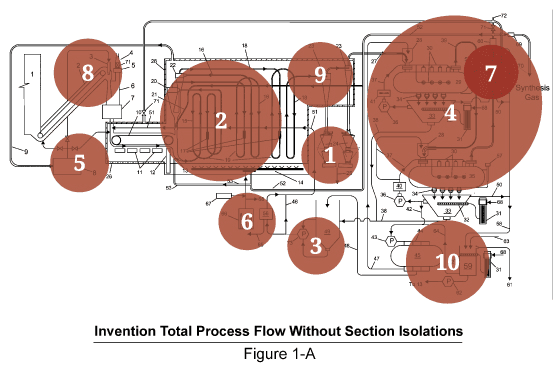
At the Idea Asset Group, we begin every patent application with a thorough evaluation of your idea. During this process, we break apart and analyze each and every individual element of your technology to evaluate whether it may be independently patentable. For some technologies, it is not uncommon to find 5, 10, or even 20 independently patentable innovations in one single idea. Each of these independently patentable directions represents an idea that is sufficiently new and novel enough to justify its own individual patent protection. It is not uncommon for our clients that have worked with other law firms in the past to comment on the number of intellectual property assets they lost out on as a result of their previous attorneys failing to recognize all the patent protection they were entitled to under patent law.
Step Two: Customize and Integrate
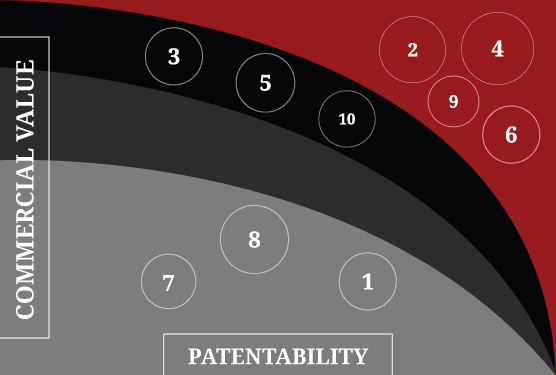
From this initial analysis, we assign each independently patentable direction a grade based on perceived patentability vs. commercial value. Next, we sit down with you and discuss the potential costs and commercial benefits for each independently patentable direction. At this point, we work with you to evaluate how each of the available patent options will integrate with your overall business objectives, as well as how best to position your patent coverage with respect to your competitors. Ultimately, we leave it up to you to choose which independently patentable directions you would like us to pursue. In this way, we are putting you in control of not only your patent coverage, but also your commercial and patentability risks, and most importantly, your overall patent costs.
Step Three: Push the Claim Envelope
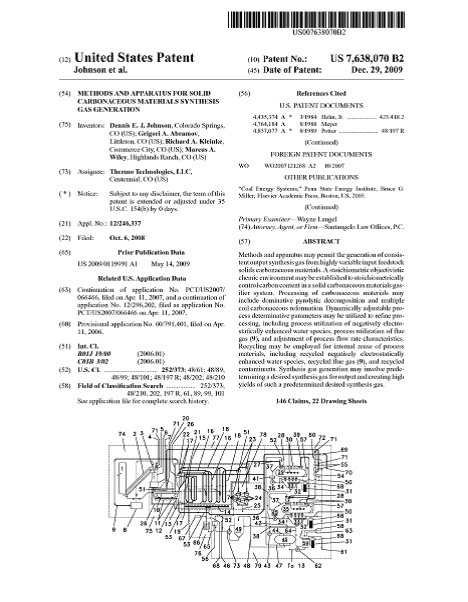
Once you have decided the scope of the patent coverage that you wish to pursue, our intellectual property attorneys will begin the process of drafting your patent application. Whether it is a domestic or international application, typically the first step in this process is to draft a set of claims for each independent direction you select. Again, at the Idea Asset Group, we take your ideas seriously, so we seek to maximize your potential coverage at every step of the process. By way of example, a typical law firm will only consider a single patentable direction. From that direction, most attorneys will draft, on average, only 20 claims to protect your entire idea. Since, by law, the patent claims will define the limits of your patent protection, such a practice greatly reduces the breadth and scope of your patent protection. Contrasting this typical scenario, the Idea Asset Group specializes in drafting high-claim-number patents. When we draft your patent application, our patent attorneys routinely generate anywhere from 50-100 claims for each independently patentable direction. For more complex inventions, it is not uncommon for our firm to draft anywhere from 300-800 individual claims at comparable costs to traditional firms. By layering multiple independent directions with high-claim numbers, as well as staggering the associated claim fees, we are able to maximize your patent coverage while minimizing costs. More importantly, we are turning your ideas into high-value strategic patents that will hold up in court, as well as in the marketplace.
Frequently Asked Questions
What is a patent and what are the different types of patents?
A patent is a form of intellectual property that provides the patent owner with the exclusive right, for a limited period of time, to exclude others from making, using, selling, offering for sale, or importing a claimed invention. Patents are commonly used to protect new and useful technologies, products, processes, machines, chemical compositions, software-related innovations, and ornamental designs.
In the United States, the primary types of patents are:
- Utility Patents protect new and useful processes, machines, manufactures, compositions of matter, and functional improvements thereof.
- Design Patents protect the ornamental appearance or visual design of an article rather than its function.
- Plant Patents protect certain new and distinct asexually reproduced plant varieties.
Additional international filing systems and specialized protections may also be available depending on the technology and countries involved.
If I come up with an idea and want to protect it under patent law, what should I do?
If you believe you may have a patentable invention, it is important to act strategically and protect the idea early in the process. In general, inventors should keep the invention confidential, avoid unnecessary public disclosures, and be cautious about sharing details with third parties without appropriate confidentiality protections in place. Inventors should also avoid entering proprietary invention details into AI chat tools or public generative AI systems, as confidentiality and data retention policies may vary and could potentially impact trade secret rights or future patent protection strategies.
A patent search and legal evaluation can help assess potential patentability, existing prior art, infringement risks, and available filing strategies. While U.S. patent law may provide a limited one-year grace period following certain public disclosures by the inventor, relying on that grace period can be risky and may significantly limit or eliminate foreign patent rights. Many foreign jurisdictions require absolute novelty and provide little or no grace period after a public disclosure. For that reason, it is often best practice to file a patent application before any public disclosure, sale, offer for sale, publication, or non-confidential discussion of the invention.
How long does the patent process usually take?
The time required to obtain a patent can vary significantly depending on the type of patent, the technology involved, the complexity of the application, the backlog at the patent office, and whether protection is being sought in the United States or internationally. In many cases, obtaining a U.S. patent may take at least one to several years, while foreign patent protection can take even longer depending on the countries involved and the applicable examination procedures. Throughout the process, patent applications are often reviewed through multiple rounds of examination and communications with the patent office before issuance.
Can I protect my patents, copyrights, and trademarks globally?
Yes. Intellectual property rights can often be protected internationally, but there is no single worldwide patent, trademark, or copyright registration that automatically provides protection in every country. Patents and trademarks generally require country-by-country filings or the use of international filing systems that streamline the application process, while copyrights are often protected internationally through treaties and reciprocal recognition between countries. An effective global intellectual property strategy should evaluate where protection is needed based on manufacturing, sales, licensing, enforcement, and business expansion goals.
Who owns a patent, trademark, trade secret, or copyright?
Ownership of intellectual property depends on the type of asset and the specific circumstances surrounding its creation and use. Patents are generally initially owned by the inventor(s), copyrights by the author(s), trademarks by the party using the mark in commerce, and trade secrets by the person or entity controlling and protecting the confidential information. However, ownership may be transferred or modified by employment agreements, assignments, work-for-hire provisions, licenses, university policies, or other contractual obligations.
What our clients say

As a whole, the folks in the office are friendly, trustworthy and are willing to entertain any and all questions. Santangelo has the diversity of expertise, the ability to think broadly about an invention, and the ability to ask the inventor pertinent questions. Moreover, they don't try to push patenting at any cost, but instead make sure that it is the correct business decision for you.
Generally, one believes attorneys will intentionally run up charges and always exceed budget numbers. In fact, Santangelo works within a budget, and makes sure one considers the costs and benefits carefully prior to starting a project.
Santangelo's services are provided in a very professional yet friendly and honest manner. Services are cost effective compared to many other patent attorneys when one considers breadth of IP, guidance on use of IP and expertise in rendering the original IP in such a way as to minimize further expenses.
Santangelo sends out the best Christmas cards ever! We save them and can't wait for the next one!
Membrane Protective Technologies, Inc.